Illinois foreclosure timelines are longer than in most states because Illinois is a judicial-foreclosure state, so the lender files suit in the Cook County Circuit Court and the case runs an average of 300 or more days…
Illinois foreclosure timelines are longer than in most states because Illinois is a judicial-foreclosure state, so the lender files suit in the Cook County Circuit Court and the case runs an average of 300 or more days before a sheriff's sale is scheduled. That gap is the window a pre-foreclosure cash sale uses: as long as the sheriff's sale has not been confirmed by the court, the owner still controls the property and can sell it to pay off the debt. The Consumer Financial Protection Bureau notes that servicers generally cannot start a foreclosure until a loan is more than 120 days delinquent, so many Chicago homeowners have several months of pre-foreclosure runway before a case is even filed. Understanding the HUD guidance on avoiding foreclosure and confirming the exact judgment status with the court matters, because the redemption period set by the Illinois Mortgage Foreclosure Law fixes how much time remains.
A cash sale fits a homeowner who has fallen behind on payments and cannot realistically catch up, whose house needs repairs that block a conventional buyer's financing, or who is out of time for a 60-to-90-day MLS listing. If the home is in good shape, equity is high, and the sheriff's sale is still months away, a traditional agent listing may net more and is worth considering; the trade-off is that a listing carries commission, showings, buyer financing contingencies, and no certainty the sale closes before the court date. A direct cash sale trades a small discount off retail for speed and certainty, which is what protects remaining equity from being wiped out at auction. The math is shown up front: the offer starts from the after-repair value, subtracts the mortgage payoff, back property taxes, recorded liens, and a repair estimate, and the difference is what the seller receives. A foreclosure judgment does not extinguish leftover equity, so selling before the sheriff's sale is often the difference between recovering thousands and recovering nothing.
This service covers the full range of Chicago situations: brick bungalows in Beverly and Portage Park, 2-flats in Logan Square and Avondale, worker cottages in Bridgeport and Pilsen, and condos and larger homes in South Shore, Uptown, Rogers Park, and Austin. Cook County property tax delinquency can trigger a separate tax sale on top of a mortgage foreclosure, and the Cook County Treasurer and Cook County Clerk records confirm what is actually owed before an offer is finalized. Recording of the deed and lien releases is handled through the standard process outlined by the Illinois Secretary of State’s office guidance on real-property transfers, and any Chicago transfer tax is calculated per the City of Chicago Department of Finance transfer-stamp rules.
How it works is short. First, a homeowner shares the address, the foreclosure notice or case number, and roughly what is owed. Second, the team pulls the title, tax, and lien status and confirms the sheriff's sale date. Third, a written cash figure with the full breakdown is presented, usually within 24 to 48 hours. Fourth, a real-estate attorney and title company clear the payoff and set a closing date ahead of the auction. A homeowner in default should also know that free counseling is available through a HUD-approved housing counselor, and options like loan modification or a short sale are worth weighing against a straight cash sale before deciding.
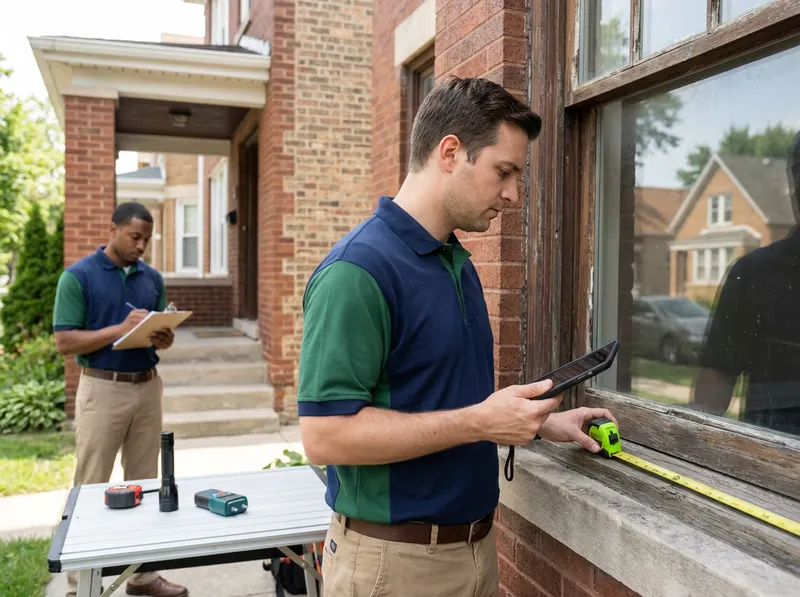
Every job gets a firm, written price after a free on-site visit.
Tell us about your foreclosure & pre-foreclosure sale job in Chicago and we'll send a clear, written quote, usually the same day.
 Cash Home Buyers Chicago Co.